Buy groothandel.eu ?
We are moving the project
groothandel.eu .
Are you interested in purchasing the domain
groothandel.eu ?
domain@kv-gmbh.de · 0541-91531010
Buy groothandel.eu ?
How are derivatives related?
Derivatives are related in the sense that they are all based on the concept of the rate of change. For example, the derivative of a function represents the rate at which the function is changing at a given point. Additionally, different types of derivatives, such as options, futures, and swaps, are related in that they are all financial instruments whose values are derived from the value of an underlying asset or index. Overall, derivatives are related in their fundamental basis of measuring and capturing the rate of change in various contexts. **
What is meant by derivatives?
Derivatives are financial instruments whose value is derived from the value of an underlying asset, index, or rate. They can be used for hedging, speculation, or arbitrage purposes. Examples of derivatives include options, futures, forwards, and swaps. **

Similar search terms for Derivatives
Top-Angebote
Products related to Derivatives:
-
Sage Distributor 54mm DuoRefine your espresso preparation with Sage the Distributor Duo, designed to break up clumps and evenly distribute coffee grounds for a flawless tamp. Crafted from stainless steel and walnut, it brings both precision and elegance to your coffee setup, complementing any modern or classic aesthetic. Compatible with 54mm Sage portafilters, this tool features eight removable distribution pins that can be arranged either angled or straight, depending on your preference. These adjustable pins work to break up clumps in the grind, ensuring a more uniform distribution and reducing the risk of channelling during extraction. The distribution face is equipped with three angled blades that rotate smoothly in either direction, helping to level the coffee bed and create a consistent tamping surface. This design ensures that your espresso shot is balanced and full-bodied, with improved flavour clarity. Height adjustability adds another layer of control, allowing you to tailor the tool to match your dose size and the depth of grind in relation to the shower screen. Whether you're using a single or double basket, this feature ensures optimal contact and extraction. Complete with a Sage 2 year warranty. Dimensions: 11(H) x 6.3(W) x 6.3(D)cm.69,95 £*Shipping: 0,00 £Secure redirect to the provider


-
How can one assign derivatives?
One can assign derivatives by calculating the rate of change of a function with respect to its independent variable. This involves finding the limit of the difference quotient as the interval over which the change is measured approaches zero. The derivative represents the slope of the tangent line to the function at a specific point and can be used to analyze the behavior of the function at that point. Derivatives are fundamental in calculus and are used to solve various problems in mathematics, science, and engineering. **
-
How can derivatives be formed?
Derivatives can be formed through a process called differentiation in calculus. This involves finding the rate of change of a function at a specific point. By taking the derivative of a function, we can determine how the function's value is changing with respect to its input. Derivatives can also be formed through rules and formulas that allow us to find the derivative of more complex functions. **
-
How do you determine derivatives?
To determine derivatives, you can use various methods such as the power rule, product rule, quotient rule, and chain rule. The power rule is used to find the derivative of functions raised to a power. The product rule is used to find the derivative of the product of two functions. The quotient rule is used to find the derivative of the quotient of two functions. The chain rule is used to find the derivative of composite functions. Additionally, you can also use the concept of limits to find the derivative of a function at a specific point. **
-
What are derivatives used for?
Derivatives are financial instruments that derive their value from an underlying asset, such as stocks, bonds, commodities, or currencies. They are used for various purposes, including hedging against price fluctuations, speculating on future price movements, and managing risk in investment portfolios. Derivatives can also be used to leverage investment positions, allowing investors to potentially amplify their returns. Overall, derivatives play a crucial role in financial markets by providing liquidity, price discovery, and risk management tools for investors and businesses. **


How do you form derivatives?
Derivatives are formed by finding the rate of change of a function with respect to its variable. This is done using the process of differentiation, which involves applying various rules and formulas to find the derivative of a given function. The most common method is to use the power rule, product rule, quotient rule, and chain rule to differentiate functions. Once the derivative is found, it represents the slope of the original function at any given point. **
What are derivatives and leverage?
Derivatives are financial instruments whose value is derived from the value of an underlying asset, such as stocks, bonds, commodities, or currencies. They can be used for hedging, speculation, or arbitrage, and include options, futures, forwards, and swaps. Leverage, on the other hand, refers to the use of borrowed funds to increase the potential return on an investment. It allows investors to control a larger position with a smaller amount of capital, but also increases the potential for both gains and losses. Both derivatives and leverage can be powerful tools for investors, but they also come with increased risk and complexity. **
Top-Angebote
Products related to Derivatives:
-
Uplift Essentials Bulk 10 Piece Wholesale Adjustable Cat & Kitten Collars With Bells Bulk 10 Piece Wholesale Adjustable Cat & Kitten Collars With BellsStock up on premium everyday pet essentials or add a vibrant pop of color to your pet's wardrobe with our Bulk 10Piece Wholesale Adjustable Cat & Kitten Collars with Bells. This multipack set is specifically woven from heavyduty, highdensity nylon...34,97 $*Shipping: 0,00 $Secure redirect to the provider
-
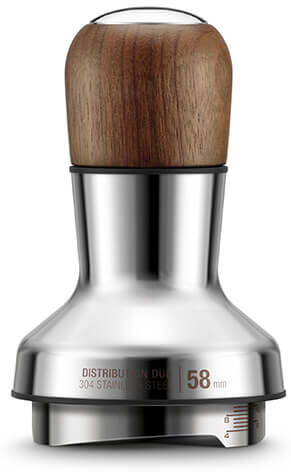
Sage Distributor 58mm DuoRefine your espresso preparation with Sage the Distributor Duo, designed to break up clumps and evenly distribute coffee grounds for a flawless tamp. Crafted from stainless steel and walnut, it brings both precision and elegance to your coffee setup, complementing any modern or classic aesthetic. Compatible with 58mm Sage portafilters, this tool features eight removable distribution pins that can be arranged either angled or straight, depending on your preference. These adjustable pins work to break up clumps in the grind, ensuring a more uniform distribution and reducing the risk of channelling during extraction. The distribution face is equipped with three angled blades that rotate smoothly in either direction, helping to level the coffee bed and create a consistent tamping surface. This design ensures that your espresso shot is balanced and full-bodied, with improved flavour clarity. Height adjustability adds another layer of control, allowing you to tailor the tool to match your dose size and the depth of grind in relation to the shower screen. Whether you're using a single or double basket, this feature ensures optimal contact and extraction. Complete with a Sage 2 year warranty. Dimensions: 11(H) x 6.7(W) x 6.7(D)cm.79,95 £*Shipping: 0,00 £Secure redirect to the provider
-
Sage Distributor 54mm DuoRefine your espresso preparation with Sage the Distributor Duo, designed to break up clumps and evenly distribute coffee grounds for a flawless tamp. Crafted from stainless steel and walnut, it brings both precision and elegance to your coffee setup, complementing any modern or classic aesthetic. Compatible with 54mm Sage portafilters, this tool features eight removable distribution pins that can be arranged either angled or straight, depending on your preference. These adjustable pins work to break up clumps in the grind, ensuring a more uniform distribution and reducing the risk of channelling during extraction. The distribution face is equipped with three angled blades that rotate smoothly in either direction, helping to level the coffee bed and create a consistent tamping surface. This design ensures that your espresso shot is balanced and full-bodied, with improved flavour clarity. Height adjustability adds another layer of control, allowing you to tailor the tool to match your dose size and the depth of grind in relation to the shower screen. Whether you're using a single or double basket, this feature ensures optimal contact and extraction. Complete with a Sage 2 year warranty. Dimensions: 11(H) x 6.3(W) x 6.3(D)cm.69,95 £*Shipping: 0,00 £Secure redirect to the provider
-
How are derivatives related?
Derivatives are related in the sense that they are all based on the concept of the rate of change. For example, the derivative of a function represents the rate at which the function is changing at a given point. Additionally, different types of derivatives, such as options, futures, and swaps, are related in that they are all financial instruments whose values are derived from the value of an underlying asset or index. Overall, derivatives are related in their fundamental basis of measuring and capturing the rate of change in various contexts. **
-
What is meant by derivatives?
Derivatives are financial instruments whose value is derived from the value of an underlying asset, index, or rate. They can be used for hedging, speculation, or arbitrage purposes. Examples of derivatives include options, futures, forwards, and swaps. **
-
How can one assign derivatives?
One can assign derivatives by calculating the rate of change of a function with respect to its independent variable. This involves finding the limit of the difference quotient as the interval over which the change is measured approaches zero. The derivative represents the slope of the tangent line to the function at a specific point and can be used to analyze the behavior of the function at that point. Derivatives are fundamental in calculus and are used to solve various problems in mathematics, science, and engineering. **
-
How can derivatives be formed?
Derivatives can be formed through a process called differentiation in calculus. This involves finding the rate of change of a function at a specific point. By taking the derivative of a function, we can determine how the function's value is changing with respect to its input. Derivatives can also be formed through rules and formulas that allow us to find the derivative of more complex functions. **
Similar search terms for Derivatives
-
How do you determine derivatives?
To determine derivatives, you can use various methods such as the power rule, product rule, quotient rule, and chain rule. The power rule is used to find the derivative of functions raised to a power. The product rule is used to find the derivative of the product of two functions. The quotient rule is used to find the derivative of the quotient of two functions. The chain rule is used to find the derivative of composite functions. Additionally, you can also use the concept of limits to find the derivative of a function at a specific point. **
-
What are derivatives used for?
Derivatives are financial instruments that derive their value from an underlying asset, such as stocks, bonds, commodities, or currencies. They are used for various purposes, including hedging against price fluctuations, speculating on future price movements, and managing risk in investment portfolios. Derivatives can also be used to leverage investment positions, allowing investors to potentially amplify their returns. Overall, derivatives play a crucial role in financial markets by providing liquidity, price discovery, and risk management tools for investors and businesses. **
-
How do you form derivatives?
Derivatives are formed by finding the rate of change of a function with respect to its variable. This is done using the process of differentiation, which involves applying various rules and formulas to find the derivative of a given function. The most common method is to use the power rule, product rule, quotient rule, and chain rule to differentiate functions. Once the derivative is found, it represents the slope of the original function at any given point. **
-
What are derivatives and leverage?
Derivatives are financial instruments whose value is derived from the value of an underlying asset, such as stocks, bonds, commodities, or currencies. They can be used for hedging, speculation, or arbitrage, and include options, futures, forwards, and swaps. Leverage, on the other hand, refers to the use of borrowed funds to increase the potential return on an investment. It allows investors to control a larger position with a smaller amount of capital, but also increases the potential for both gains and losses. Both derivatives and leverage can be powerful tools for investors, but they also come with increased risk and complexity. **
* All prices are inclusive of VAT and, if applicable, plus shipping costs. The offer information is based on the details provided by the respective shop and is updated through automated processes. Real-time updates do not occur, so deviations can occur in individual cases. ** Note: Parts of this content were created by AI.